What this page covers
What does the Bible mean by hope, and what is it based on?
Biblical hope: confident expectation grounded in God’s character and promises, including the Christian hope of resurrection. Endurance in the present is covered under Strength.
In everyday speech, hope often means a wish: “I hope it doesn’t rain.” Biblical hope is closer to confident expectation. It rests on what God has done and promised, so it can be held even when present circumstances give no reason for optimism.
Hope grounded in God’s character
The clearest example is in Lamentations, written after Jerusalem was destroyed. In the middle of a long lament, the writer stops and says: “This I recall to my mind; therefore I have hope” (Lamentations 3:21–24). Nothing outside has changed. What has changed is what the writer chooses to remember — the LORD’s loving kindness, new every morning.
Hope that grows through difficulty
Paul makes a surprising claim in Romans 5:3–5: suffering, endured, produces character, and character produces hope. He is not saying suffering is good, but that God can bring something lasting out of it. He also insists that hope is for what is not yet visible (Romans 8:24–25).
The Christian hope
For the New Testament, the center of hope is the resurrection of Jesus. First Peter calls it a “living hope” (1 Peter 1:3). Christians differ on many details about the end of all things, but share this core expectation: that death does not have the final word.
A note on popular verses
Jeremiah 29:11 — God’s “thoughts of peace, and not of evil, to give you hope and a future” — is one of the most shared hope verses. It was first written to exiles who would not return home for seventy years; our explanation of Jeremiah 29:11 shows how to read it faithfully.
Passages, in context
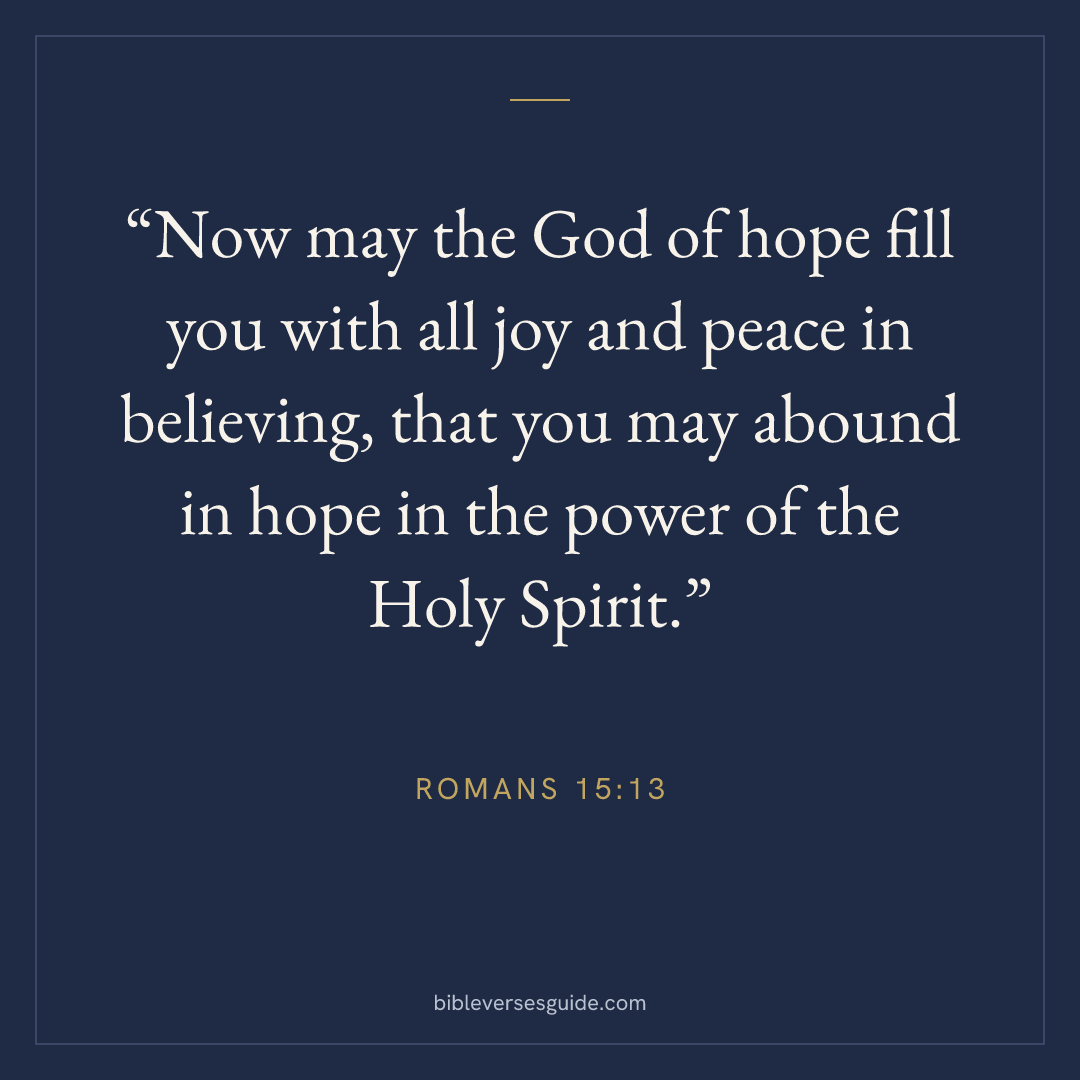
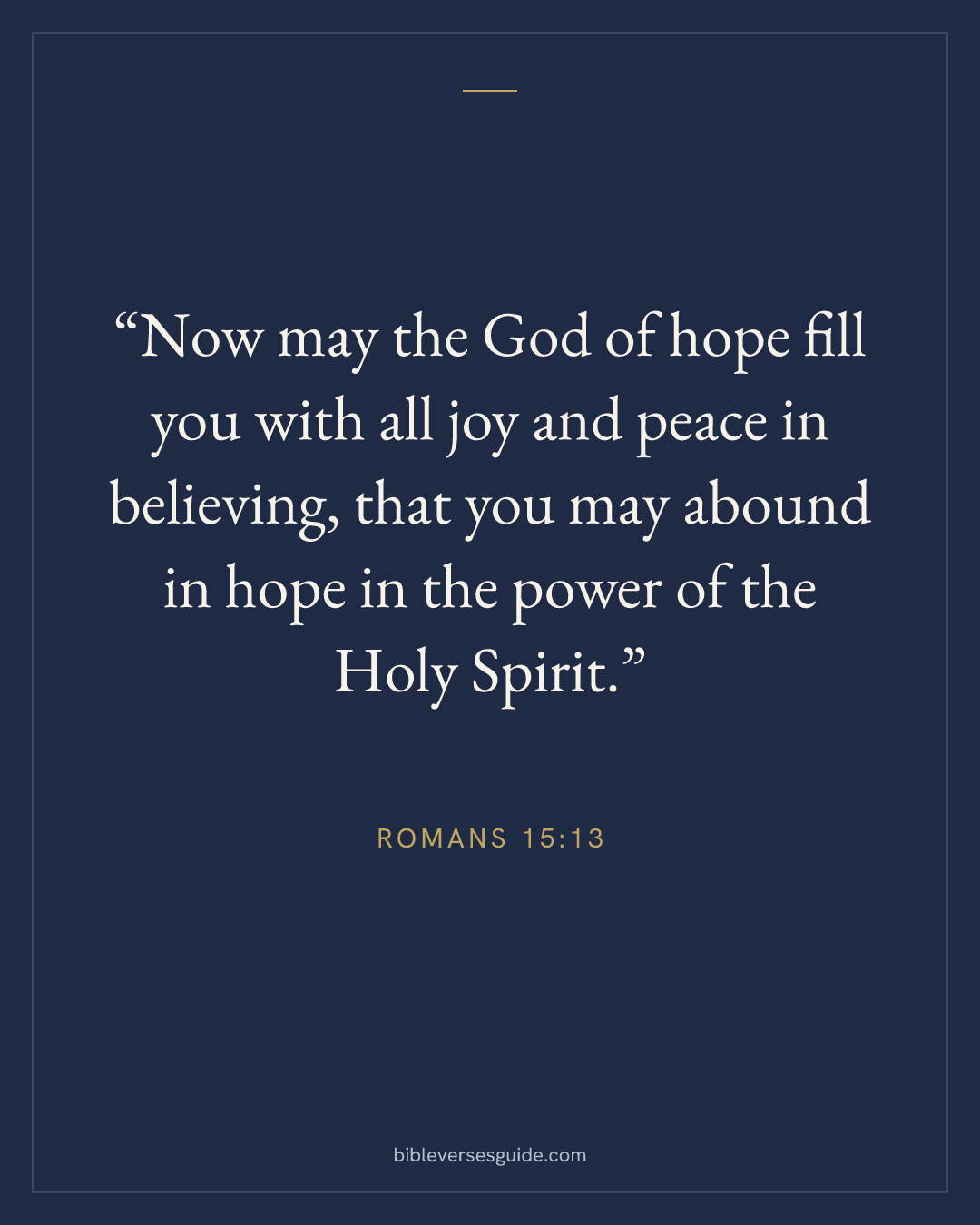
Now may the God of hope fill you with all joy and peace in believing, that you may abound in hope in the power of the Holy Spirit.
Deus autem spei repleat vos omni gaudio, et pace in credendo: ut abundetis in spe, et virtute Spiritus Sancti.ad Romanos 15:13 · Clementine Vulgate
Paul calls God “the God of hope” and prays that hope will overflow — hope as a gift that grows, not a mood to produce.
Paul’s blessing near the end of Romans
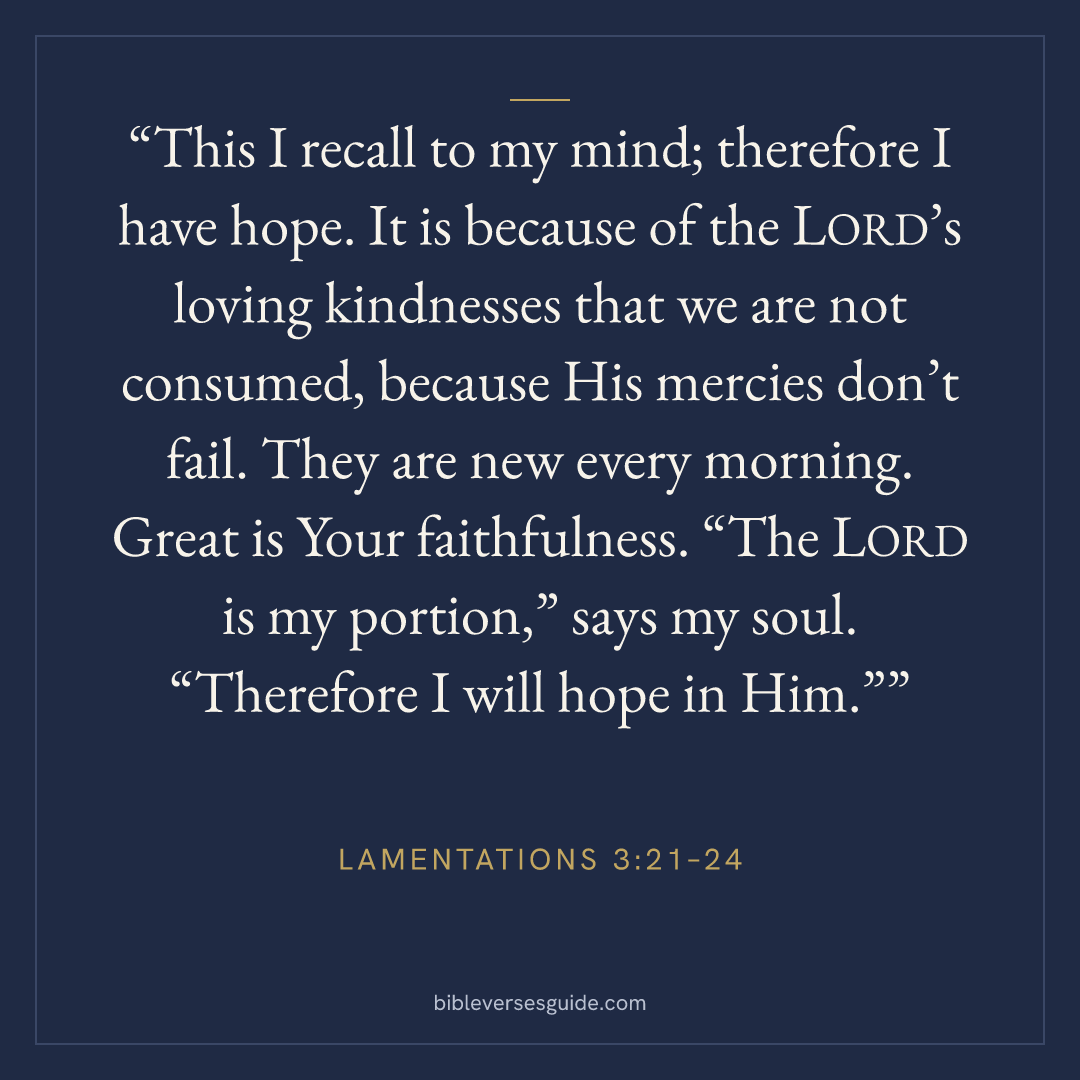
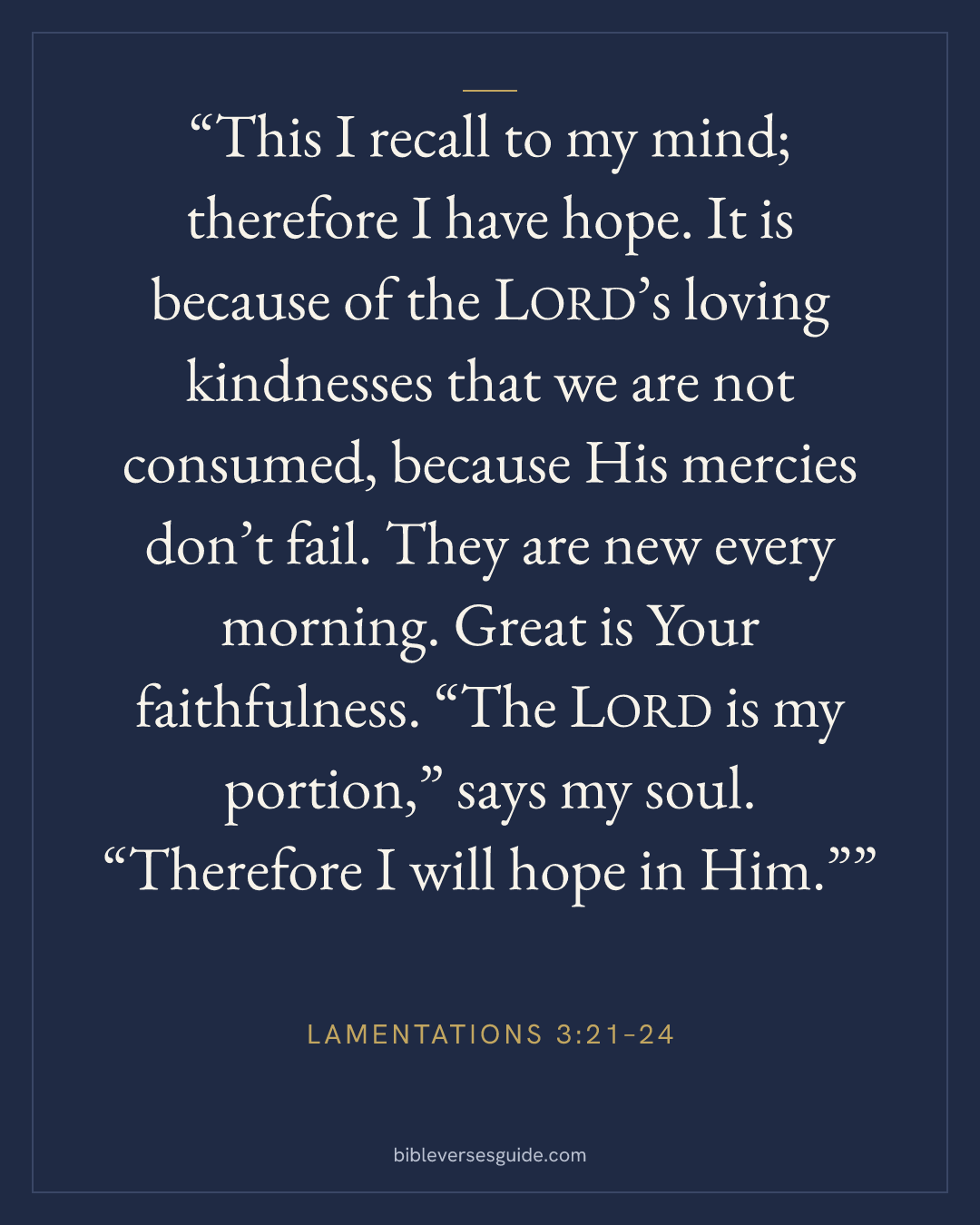
This I recall to my mind;
therefore I have hope.
It is because of the Lord’s loving kindnesses that we are not consumed,
because His mercies don’t fail.
They are new every morning.
Great is Your faithfulness.
“The Lord is my portion,” says my soul.
“Therefore I will hope in Him.”
Latin correspondence unavailable for this passage.
Written amid the ruins of Jerusalem: the writer chooses to remember God’s steadfast love, new every morning. Hope here is a decision made in grief.
A lament after Jerusalem’s destruction
Not only this, but we also rejoice in our sufferings, knowing that suffering produces perseverance; and perseverance, proven character; and proven character, hope; and hope doesn’t disappoint us, because God’s love has been poured into our hearts through the Holy Spirit who was given to us.
Non solum autem, sed et gloriamur in tribulationibus: scientes quod tribulatio patientiam operatur: patientia autem probationem, probatio vero spem, spes autem non confundit: quia caritas Dei diffusa est in cordibus nostris per Spiritum Sanctum, qui datus est nobis.ad Romanos 5:3–5 · Clementine Vulgate
Paul traces a path from suffering to endurance to character to hope, and says this hope “doesn’t disappoint.”
Paul to the church in Rome
but those who wait for the Lord will renew their strength.
They will mount up with wings like eagles.
They will run, and not be weary.
They will walk, and not faint.
qui autem sperant in Domino mutabunt fortitudinem, assument pennas sicut aquilæ: current et non laborabunt, ambulabunt et non deficient.Isaias 40:31 · Clementine Vulgate
Those who wait for the LORD renew their strength — waiting is active trust.
Comfort to Israel in exile
Why are you in despair, my soul?
Why are you disturbed within me?
Hope in God! For I shall still praise Him,
the saving help of my countenance, and my God.
Quare tristis es, anima mea? et quare conturbas me? Spera in Deo, quoniam adhuc confitebor illi, salutare vultus mei, et Deus meus.Vulgate Psalm 41:12 · Clementine Vulgate
The psalmist argues with his own despair and tells himself to hope in God. Hope is spoken in the middle of the struggle, not after it.
A psalm of longing, attributed to the sons of Korah
For we were saved in hope, but hope that is seen is not hope. For who hopes for that which he sees? But if we hope for that which we don’t see, we wait for it with patience.
Spe enim salvi facti sumus. Spes autem, quæ videtur, non est spes: nam quod videt quis, quid sperat? Si autem quod non videmus, speramus: per patientiam exspectamus.ad Romanos 8:24–25 · Clementine Vulgate
Hope by definition is for what is not yet seen; Paul connects it to patient waiting.
Paul on creation’s longing for renewal
This hope we have as an anchor of the soul, a hope both sure and steadfast and entering into that which is within the veil,
quam sicut anchoram habemus animæ tutam ac firmam, et incedentem usque ad interiora velaminis,ad Hebræos 6:19 · Clementine Vulgate
Hope as an anchor — steadying, not removing, the storm.
The Letter to the Hebrews, on God’s unchanging promise
Blessed be the God and Father of our Lord Jesus Christ, who according to His great mercy caused us to be born again to a living hope through the resurrection of Jesus Christ from the dead,
Benedictus Deus et Pater Domini nostri Jesu Christi, qui secundum misericordiam suam magnam regeneravit nos in spem vivam, per resurrectionem Jesu Christi ex mortuis,1 Petri 1:3 · Clementine Vulgate
The Christian hope is “living” because it rests on the resurrection of Jesus.
Opening blessing of First Peter
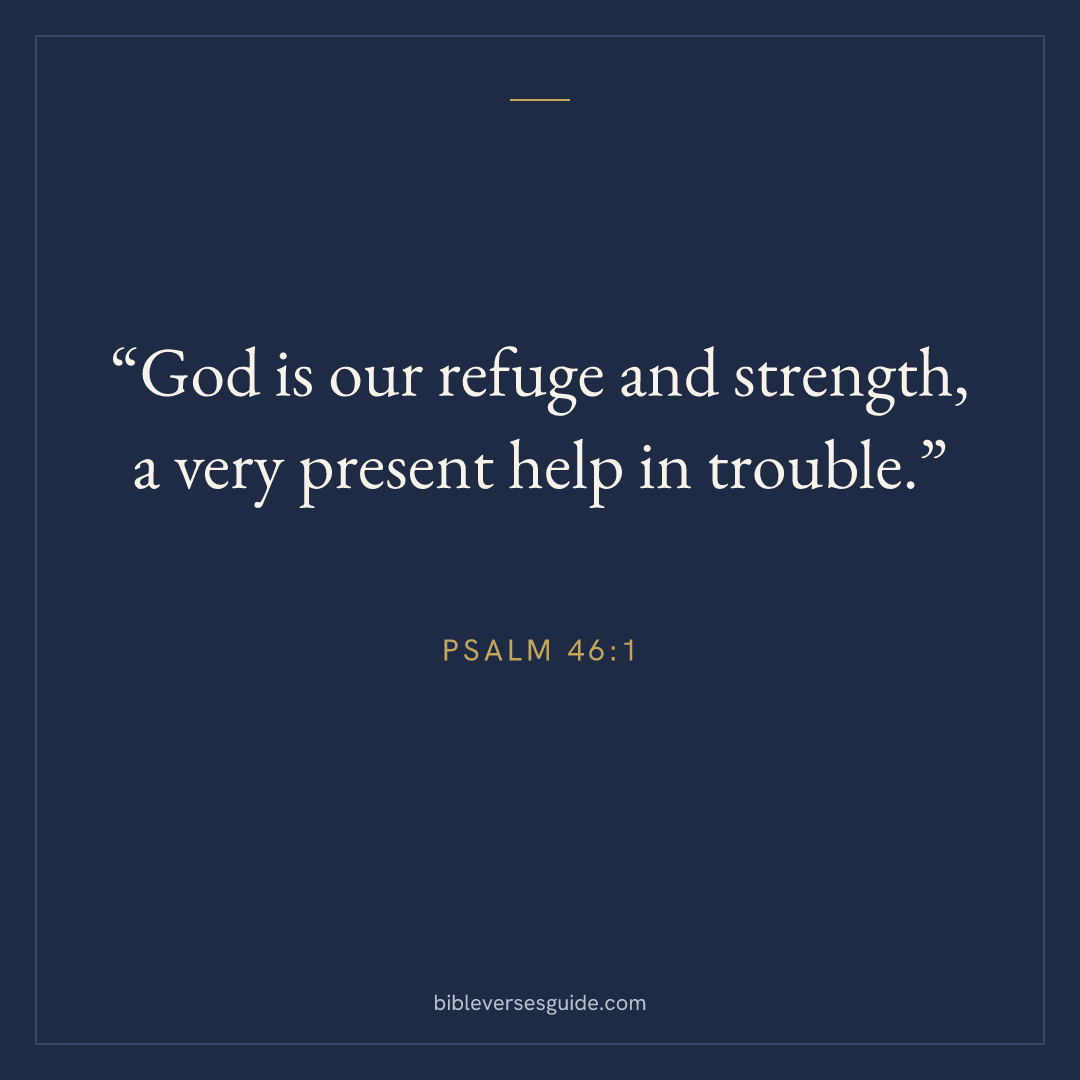
God is our refuge and strength,
a very present help in trouble.
Deus noster refugium et virtus; adjutor in tribulationibus quæ invenerunt nos nimis.Vulgate Psalm 45:2 · Clementine Vulgate
God as refuge and strength: a song of confidence when the earth itself seems to give way.
A song of the sons of Korah
How this differs from related topics
Hope looks forward; Strength is about enduring now; Peace is about present wholeness. Optimism — expecting things to turn out well — is not the same as biblical hope, which several of these passages hold onto while things are going badly.