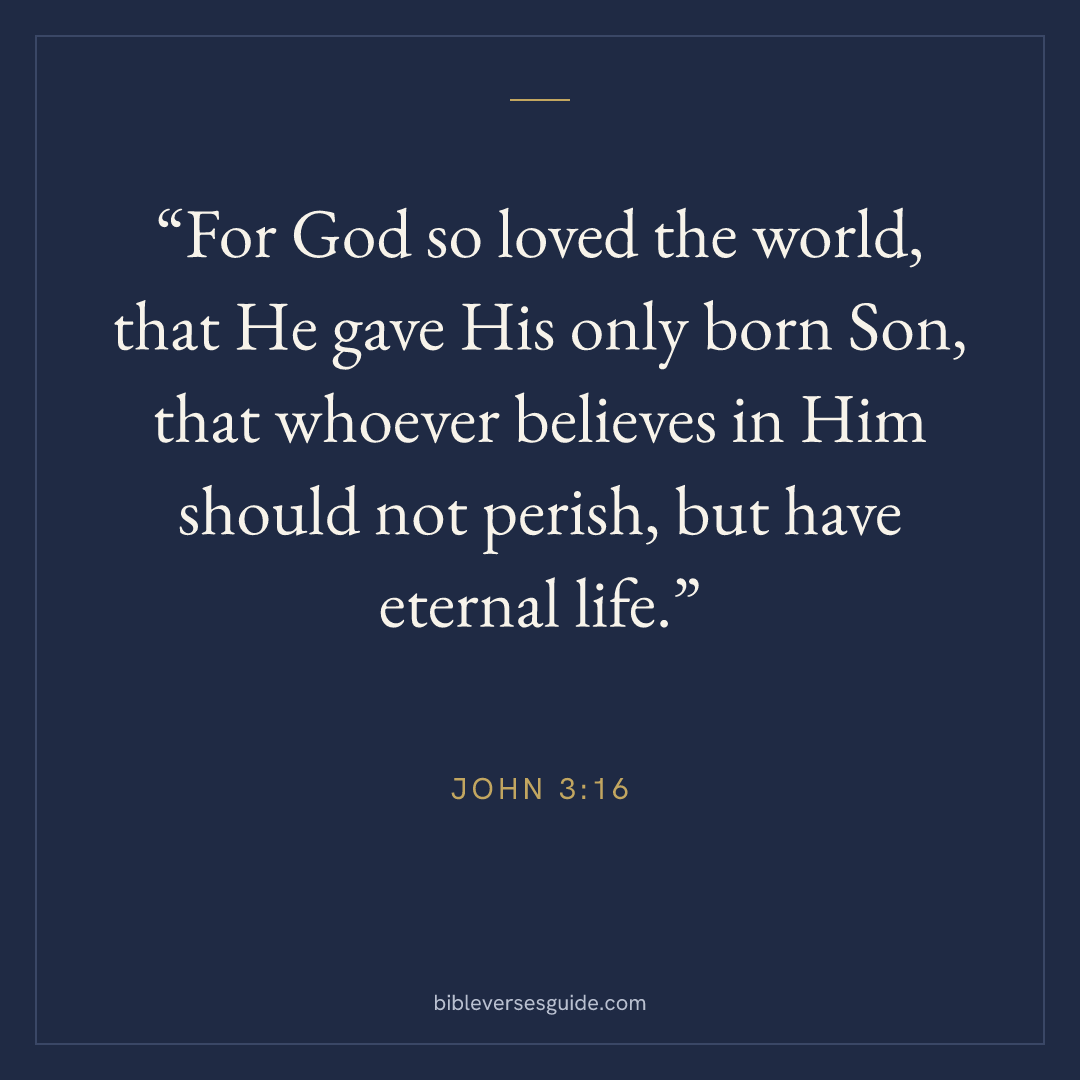
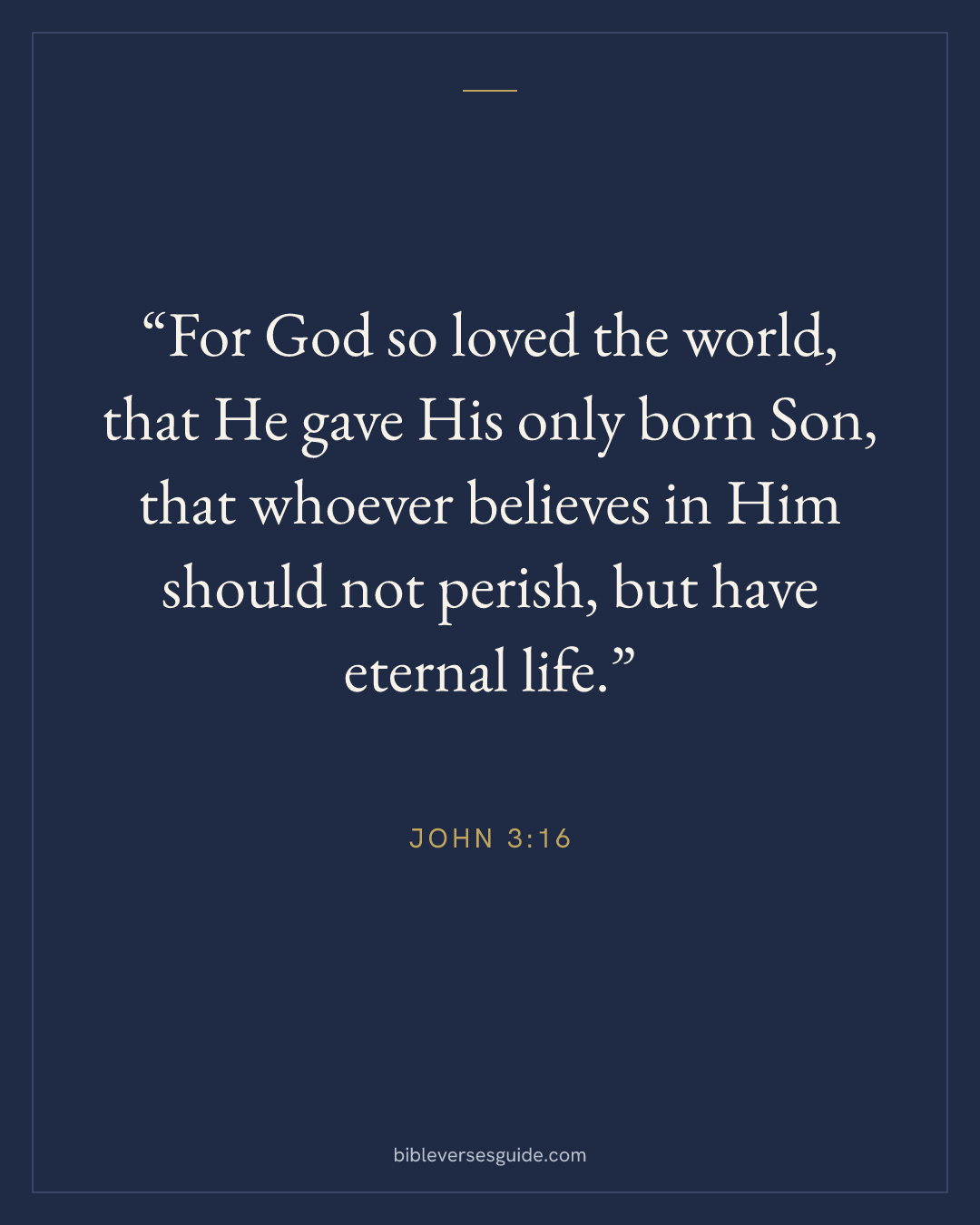
For God so loved the world, that He gave His only born Son, that whoever believes in Him should not perish, but have eternal life.
Sic enim Deus dilexit mundum, ut Filium suum unigenitum daret: ut omnis qui credit in eum, non pereat, sed habeat vitam æternam.Joannes 3:16 · Clementine Vulgate
Explanation — not a translation
In brief
John 3:16 summarizes the Gospel of John’s central claim: God’s love for the world is shown in the giving of His Son, so that whoever believes in Him will not perish but have eternal life.
The setting
The verse belongs to a conversation that begins in John 3:1. Nicodemus, a Pharisee and member of the Jewish ruling council, comes to Jesus at night. Jesus tells him that no one can see God’s kingdom without being born “anew” — the Greek word can also mean “from above” — and Nicodemus does not understand.
As Moses lifted up the serpent in the wilderness, even so must the Son of Man be lifted up, that whoever believes in Him should not perish, but have eternal life.
Et sicut Moyses exaltavit serpentem in deserto, ita exaltari oportet Filium hominis: ut omnis qui credit in ipsum, non pereat, sed habeat vitam æternam.Joannes 3:14–15 · Clementine Vulgate
Just before 3:16, Jesus recalls Numbers 21, where Moses lifted up a bronze serpent and those who looked at it lived.
Many scholars think the words from about 3:16 onward may be the evangelist’s reflection on the conversation rather than a continuation of Jesus’ speech; ancient Greek had no quotation marks. Either way, the passage presents itself as the meaning of what Jesus said.
Key words
- “God so loved” — so here means “in this way”: the verse describes how God loved, by giving.
- “the world” — in John, kosmos often means humanity in its estrangement from God. The love is directed at people who have not yet responded.
- “His only born Son” — the World English Bible’s rendering of monogenēs, traditionally “only begotten” and in many modern versions “one and only.” It stresses uniqueness.
- “believes in” — in John, believing is entrusting oneself to Jesus, not only agreeing with facts about Him.
- “eternal life” — for John, a quality of life with God that begins now (John 17:3), not only life after death.
For God didn’t send His Son into the world to judge the world, but that the world should be saved through Him.
Non enim misit Deus Filium suum in mundum, ut judicet mundum, sed ut salvetur mundus per ipsum.Joannes 3:17 · Clementine Vulgate
The next verse clarifies the purpose: not to condemn but to save.
What it doesn’t necessarily mean
John 3:16 is sometimes read in isolation as a formula. In context it is an invitation spoken to a sincere, confused religious leader — and Nicodemus later reappears defending Jesus (John 7:50) and helping to bury Him (John 19:39).
Across traditions
All Christian traditions treat this verse as a summary of the gospel. They differ in how they describe the relationship of faith, baptism (John 3:5) and grace; the question on grace outlines those differences.