What this page covers
What does the Bible say to someone who is anxious or can’t stop worrying?
Passages that speak directly to worry and anxiety, read in their setting. For peace as a broader theme, see Peace; for fear in the face of danger, see Strength.
Scripture does not treat anxiety as something only unfaithful people feel. The psalmists describe sleepless nights and racing thoughts; Paul writes that his concern for the churches pressed on him daily (2 Corinthians 11:28). When Jesus says “don’t be anxious,” He is speaking to ordinary people who worried about food and clothing because those things were genuinely uncertain.
What these passages ask
Most of these texts ask for a specific response: to hand the worry over. 1 Peter 5:7 uses the image of casting a burden onto someone stronger; Philippians 4:6–7 describes doing that through prayer “with thanksgiving.” Jesus’ teaching in Matthew 6:25–27 asks people to look at the world around them as evidence of God’s care.
What they don’t promise
None of these passages promises that anxious feelings will vanish, or that continued anxiety is a sign of weak faith. Philippians promises a peace that guards the heart — protection in the middle of a situation — not that the situation will resolve. Christian traditions, Catholic and Protestant alike, also recognize that anxiety can have medical causes and that treating them is good.
If anxiety is overwhelming or persistent, please talk with a doctor or counselor. In the United States you can call or text 988 at any time.
A way to use this page
Read one passage slowly, then read the chapter around it — the reader links take you there. Many people find it helpful to pray Philippians 4:6 as it is written: naming the request, then naming something to be grateful for.
Passages, in context
In nothing be anxious, but in everything, by prayer and petition with thanksgiving, let your requests be made known to God. And the peace of God, which surpasses all understanding, will guard your hearts and your thoughts in Christ Jesus.
Nihil solliciti sitis: sed in omni oratione, et obsecratione, cum gratiarum actione petitiones vestræ innotescant apud Deum. Et pax Dei, quæ exuperat omnem sensum, custodiat corda vestra, et intelligentias vestras in Christo Jesu.ad Philippenses 4:6–7 · Clementine Vulgate
Paul’s instruction is concrete: bring everything to God in prayer, with thanksgiving. The promised result is a guarding peace, not an explanation.
Paul, writing from prison
casting all your worries on Him, because He cares for you.
omnem sollicitudinem vestram projicientes in eum, quoniam ipsi cura est de vobis.1 Petri 5:7 · Clementine Vulgate
Worries are to be handed over because God cares — the reason given is relationship, not technique.
To a community under pressure
Therefore I tell you, don’t be anxious for your life: what you will eat, or what you will drink; nor yet for your body, what you will wear. Isn’t life more than food, and the body more than clothing? See the birds of the sky, that they don’t sow, neither do they reap, nor gather into barns. Your heavenly Father feeds them. Aren’t you of much more value than they? “Which of you by being anxious, can add one moment to his lifespan?
Ideo dico vobis, ne solliciti sitis animæ vestræ quid manducetis, neque corpori vestro quid induamini. Nonne anima plus est quam esca, et corpus plus quam vestimentum? Respicite volatilia cæli, quoniam non serunt, neque metunt, neque congregant in horrea: et Pater vester cælestis pascit illa. Nonne vos magis pluris estis illis? Quis autem vestrum cogitans potest adjicere ad staturam suam cubitum unum?Matthæus 6:25–27 · Clementine Vulgate
Jesus points to the birds and asks what worry adds. The passage is an invitation to trust, given to people who had real reasons to worry about food and clothing.
Jesus in the Sermon on the Mount
Therefore don’t be anxious for tomorrow, for tomorrow will be anxious for itself. Each day’s own evil is sufficient.
Nolite ergo solliciti esse in crastinum. Crastinus enim dies sollicitus erit sibi ipsi: sufficit diei malitia sua.Matthæus 6:34 · Clementine Vulgate
One day at a time: Jesus acknowledges that each day has its own trouble.
Jesus in the Sermon on the Mount
“Come to Me, all you who labor and are heavily burdened, and I will give you rest. Take My yoke upon you and learn from Me, for I am gentle and humble in heart; and you will find rest for your souls. For My yoke is easy, and My burden is light.”
Venite ad me omnes qui laboratis, et onerati estis, et ego reficiam vos. Tollite jugum meum super vos, et discite a me, quia mitis sum, et humilis corde: et invenietis requiem animabus vestris. Jugum enim meum suave est, et onus meum leve.Matthæus 11:28–30 · Clementine Vulgate
An open invitation to the weary and burdened, with the promise of rest.
Jesus’ invitation to the crowds
In the multitude of my thoughts within me,
Your comforts delight my soul.
Latin correspondence unavailable for this passage.
A psalmist admits to a crowd of anxious thoughts — and says God’s comfort met them there.
A psalm asking God to judge injustice
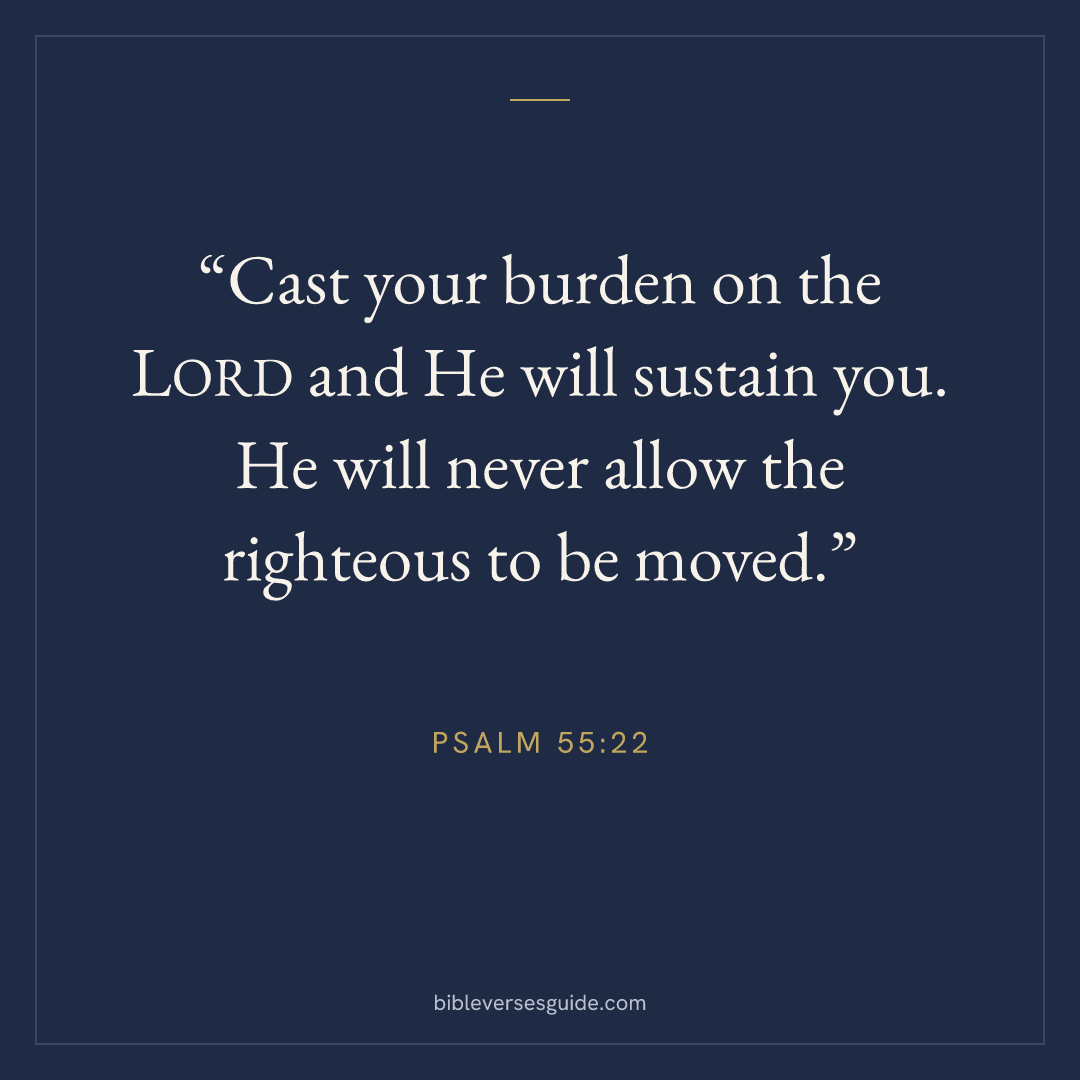
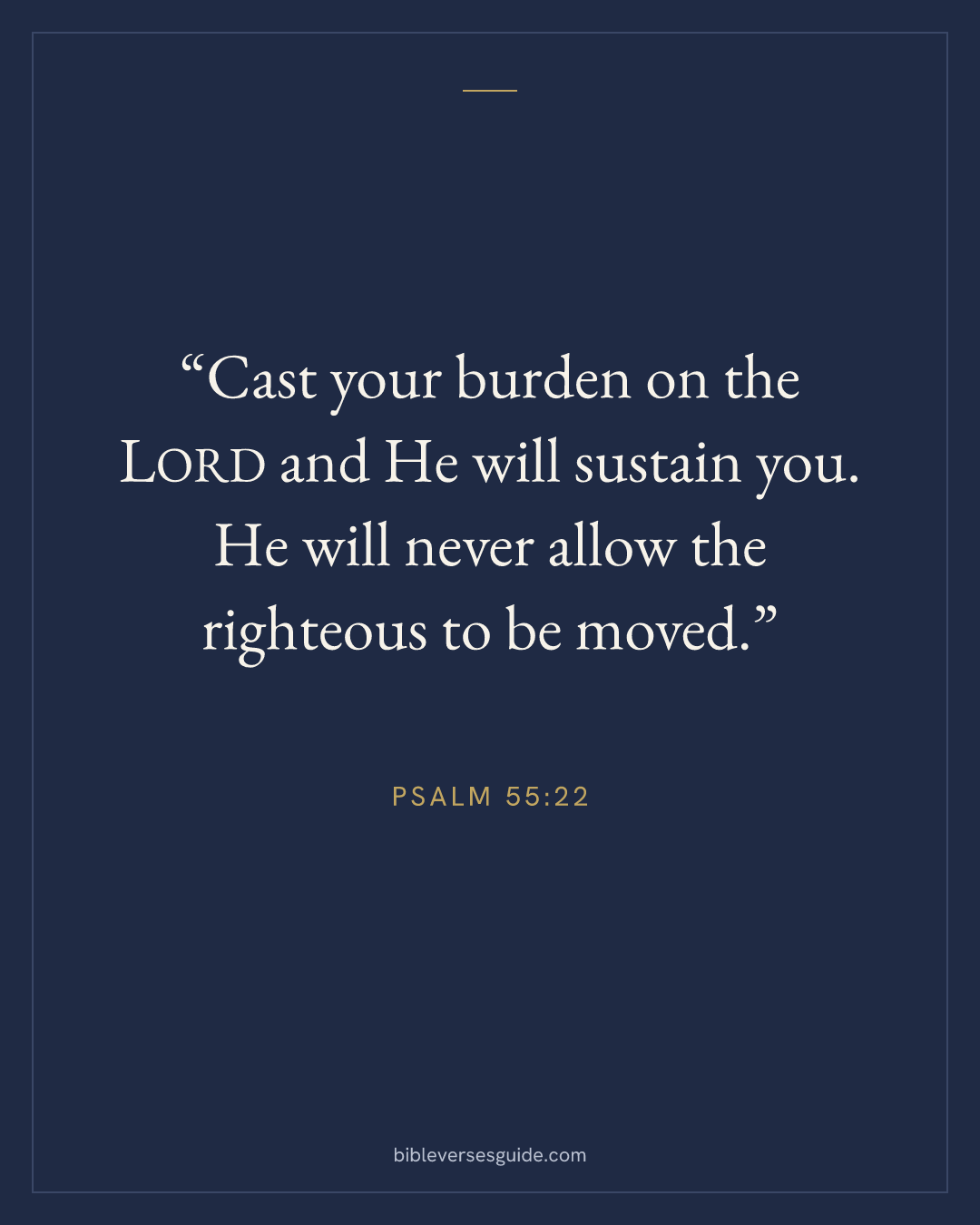
Cast your burden on the Lord and He will sustain you.
He will never allow the righteous to be moved.
Jacta super Dominum curam tuam, et ipse te enutriet; non dabit in æternum fluctuationem justo.Vulgate Psalm 54:23 · Clementine Vulgate
Cast your burden on the LORD: the same image 1 Peter later uses, from a psalm written in betrayal and distress.
A psalm of David, written in distress
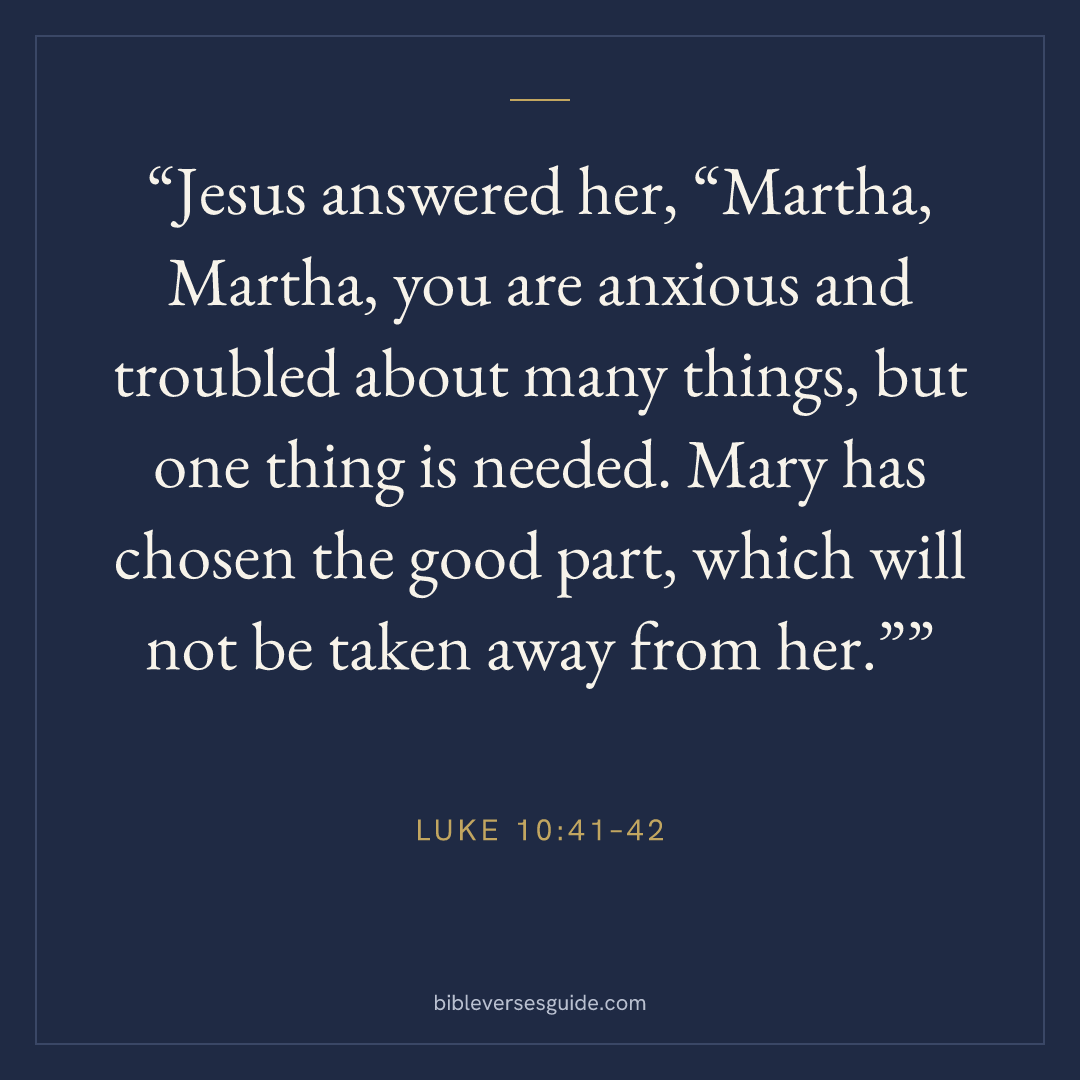
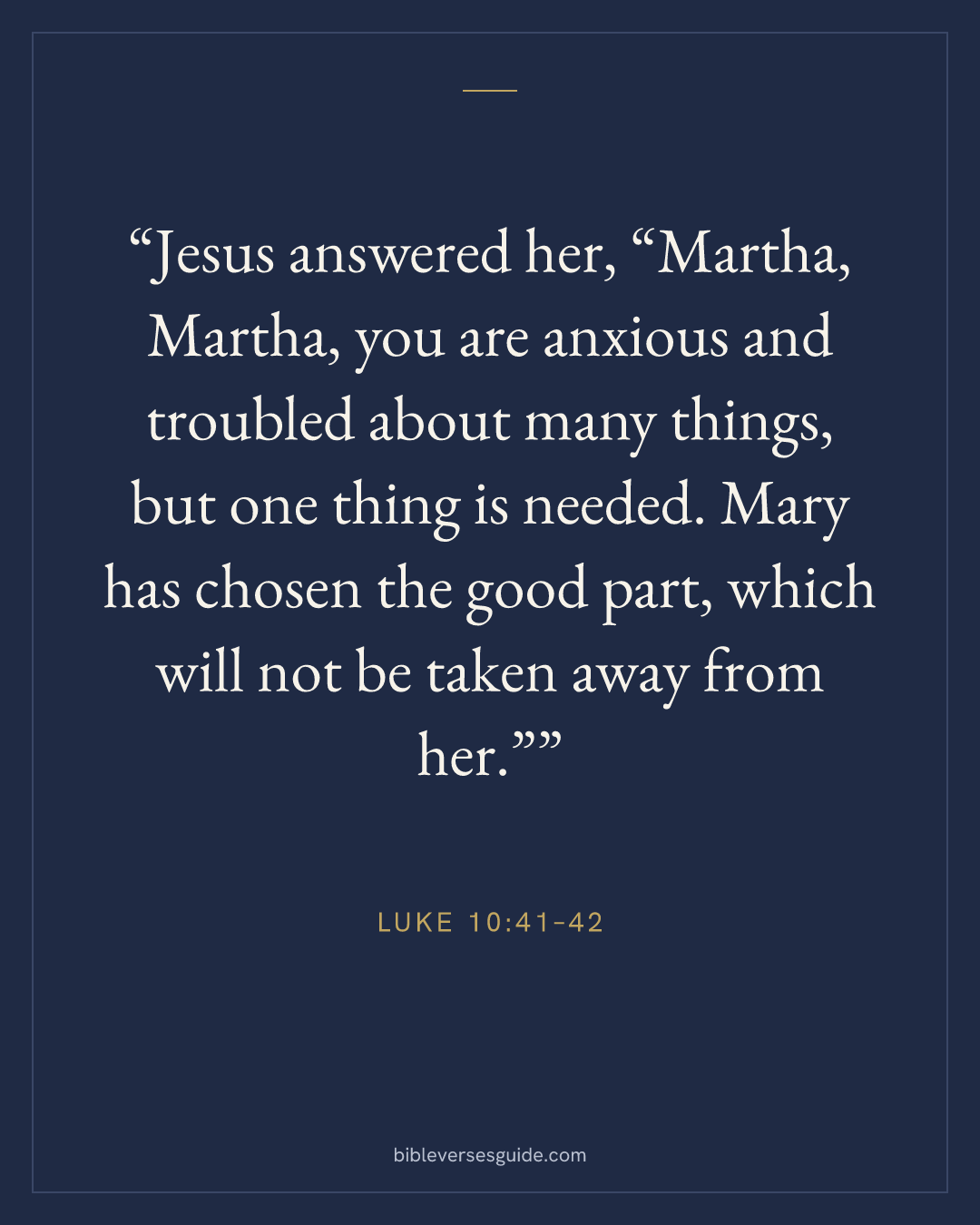
Jesus answered her, “Martha, Martha, you are anxious and troubled about many things, but one thing is needed. Mary has chosen the good part, which will not be taken away from her.”
Et respondens dixit illi Dominus: Martha, Martha, sollicita es, et turbaris erga plurima, porro unum est necessarium. Maria optimam partem elegit, quæ non auferetur ab ea.Lucas 10:41–42 · Clementine Vulgate
Jesus names Martha’s worry gently and points to what matters most, without dismissing her work.
Jesus at the home of Martha and Mary
How this differs from related topics
Peace describes what Scripture offers; this page starts from the experience of worry itself. Fear of a specific danger is gathered under Strength, where most “do not be afraid” passages belong. This page is not medical advice: persistent anxiety deserves professional care, and seeking it is not a failure of faith.