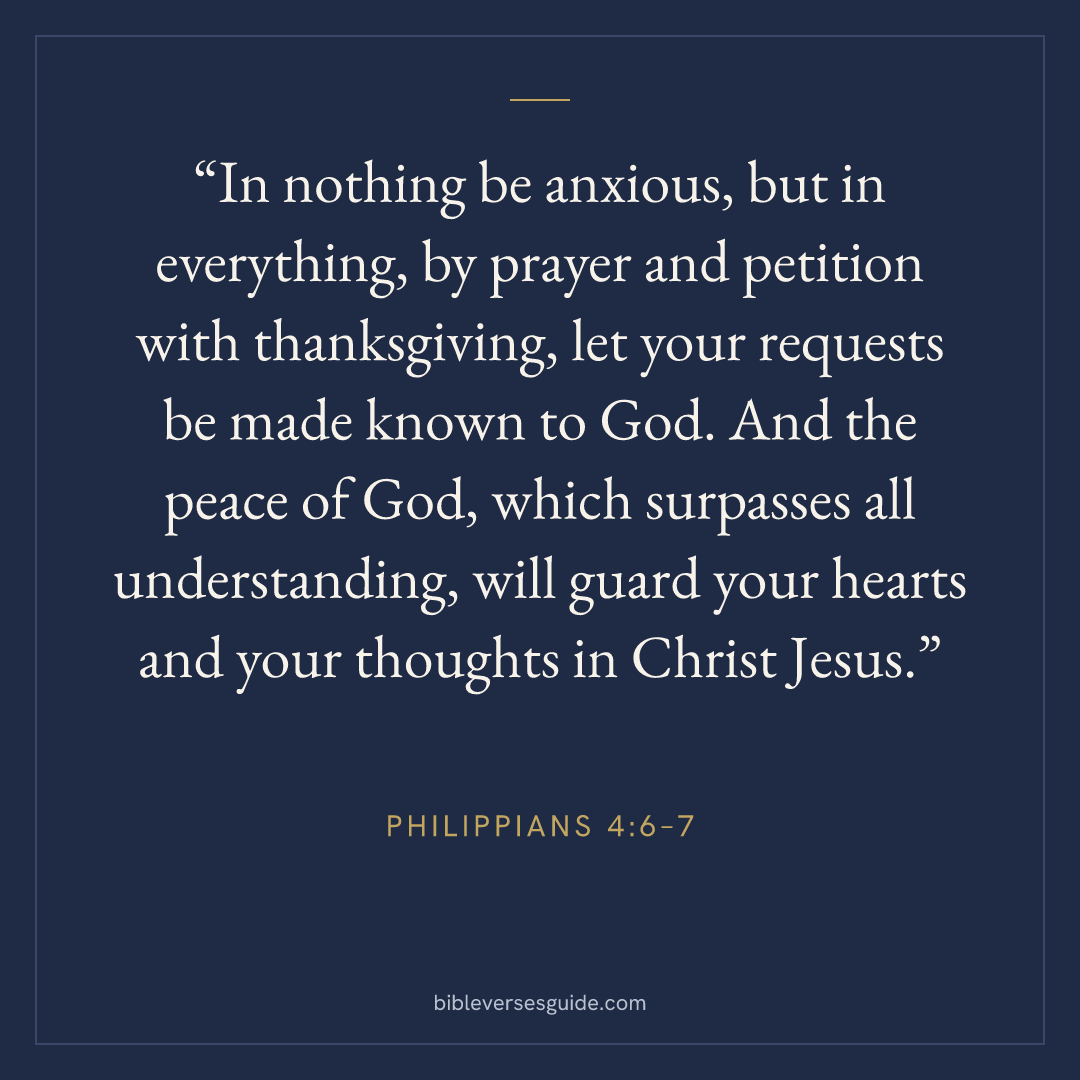
In nothing be anxious, but in everything, by prayer and petition with thanksgiving, let your requests be made known to God. And the peace of God, which surpasses all understanding, will guard your hearts and your thoughts in Christ Jesus.
Nihil solliciti sitis: sed in omni oratione, et obsecratione, cum gratiarum actione petitiones vestræ innotescant apud Deum. Et pax Dei, quæ exuperat omnem sensum, custodiat corda vestra, et intelligentias vestras in Christo Jesu.ad Philippenses 4:6–7 · Clementine Vulgate
Explanation — not a translation
In brief
Paul tells the Philippians to bring every concern to God in prayer, with thanksgiving, and promises that God’s peace — which goes beyond human understanding — will guard their hearts and minds in Christ Jesus.
The setting
Paul wrote Philippians while imprisoned (Philippians 1:7, 13), uncertain whether he would live or die (1:20-24). The church in Philippi was facing opposition and some internal tension; just before this passage he urges two leaders, Euodia and Syntyche, to agree (4:2). The command not to be anxious comes from someone with plenty to be anxious about.
Rejoice in the Lord always! Again I will say, “Rejoice!” Let your gentleness be known to all men. The Lord is at hand.
Gaudete in Domino semper: iterum dico gaudete. Modestia vestra nota sit omnibus hominibus: Dominus prope est.ad Philippenses 4:4–5 · Clementine Vulgate
The verses just before: rejoice, be gentle, “the Lord is at hand.”
What it says
Paul does not tell his readers simply to stop worrying. He gives them something to do instead: bring requests to God — “prayer and petition” — with thanksgiving. Gratitude is not a condition for being heard; it reframes the request by remembering what God has already done.
The result is a peace that “surpasses all understanding.” It does not depend on understanding how the situation will turn out.
A military word
The verb translated “guard” (phroureō) was used of a garrison protecting a city. Philippi was a Roman colony with a strong military identity, so the image would have been vivid: God’s peace standing watch over hearts and minds.
What it doesn’t necessarily mean
This passage is not a promise that anxious feelings will disappear immediately, and it does not treat anxiety as sin. It describes a practice and a gift. Christian pastors and counselors widely recognize that anxiety can have medical causes, and seeking treatment is consistent with trusting God.
Read on
Finally, brothers, whatever things are true, whatever things are honorable, whatever things are just, whatever things are pure, whatever things are lovely, whatever things are of good report: if there is any virtue and if there is anything worthy of praise, think about these things. Do the things which you learned, received, heard, and saw in me, and the God of peace will be with you.
De cetero fratres, quæcumque sunt vera, quæcumque pudica, quæcumque justa, quæcumque sancta, quæcumque amabilia, quæcumque bonæ famæ, siqua virtus, siqua laus disciplinæ, hæc cogitate. Quæ et didicistis, et accepistis, et audistis, et vidistis in me, hæc agite: et Deus pacis erit vobiscum.ad Philippenses 4:8–9 · Clementine Vulgate
Paul continues with what to dwell on — and repeats the promise of God’s peace.
The page on anxiety and worry gathers related passages.