What this page covers
What does the Bible mean by peace, and where does it say peace comes from?
This page covers peace as Scripture uses the word: wholeness with God, calm in the heart, and reconciliation with others. Worry and anxiety have their own page; this one is about what peace is and its sources.
In the Old Testament, the Hebrew word usually translated peace is shalom. It means more than calm: completeness, health, safety, right relationship — a life with nothing essential missing. When the New Testament writes in Greek, eirēnē carries much of the same weight. That is why the Bible can speak of peace with God, peace in the heart and peace between neighbors as parts of one thing.
Peace with God
For Paul, peace begins as a relationship restored. In Romans 5:1 it follows directly from being “justified by faith” — not a mood but a standing. Christians across traditions affirm this, though they describe justification in different terms; the question on grace explains where Catholic and Protestant readings differ and where they now agree.
Peace of mind
The passages most often quoted for peace of mind are spoken to people under pressure. Jesus’ words in John 14:27 come on the night before His death; Paul’s in Philippians 4:6–7 come from prison. Neither promises that circumstances will change. Philippians says that peace will guard hearts and minds — a soldier’s word — and that this peace “surpasses all understanding.” The peace is real even when the situation remains unresolved.
Peace between people
Scripture also treats peace as work to be done. Jesus blesses peacemakers (Matthew 5:9), and Paul asks communities to let peace “rule” their life together (Colossians 3:15). Reading the personal and communal passages side by side guards against treating peace as purely private.
Reading these passages well
Many of these verses are blessings or promises spoken to a particular people. The priestly blessing in Numbers 6:24–26 was given to Israel; Isaiah’s song looks to a restored Jerusalem. Christians have long prayed them for themselves and others, and that is a fair use — but it helps to know their first setting before applying them.
Passages, in context
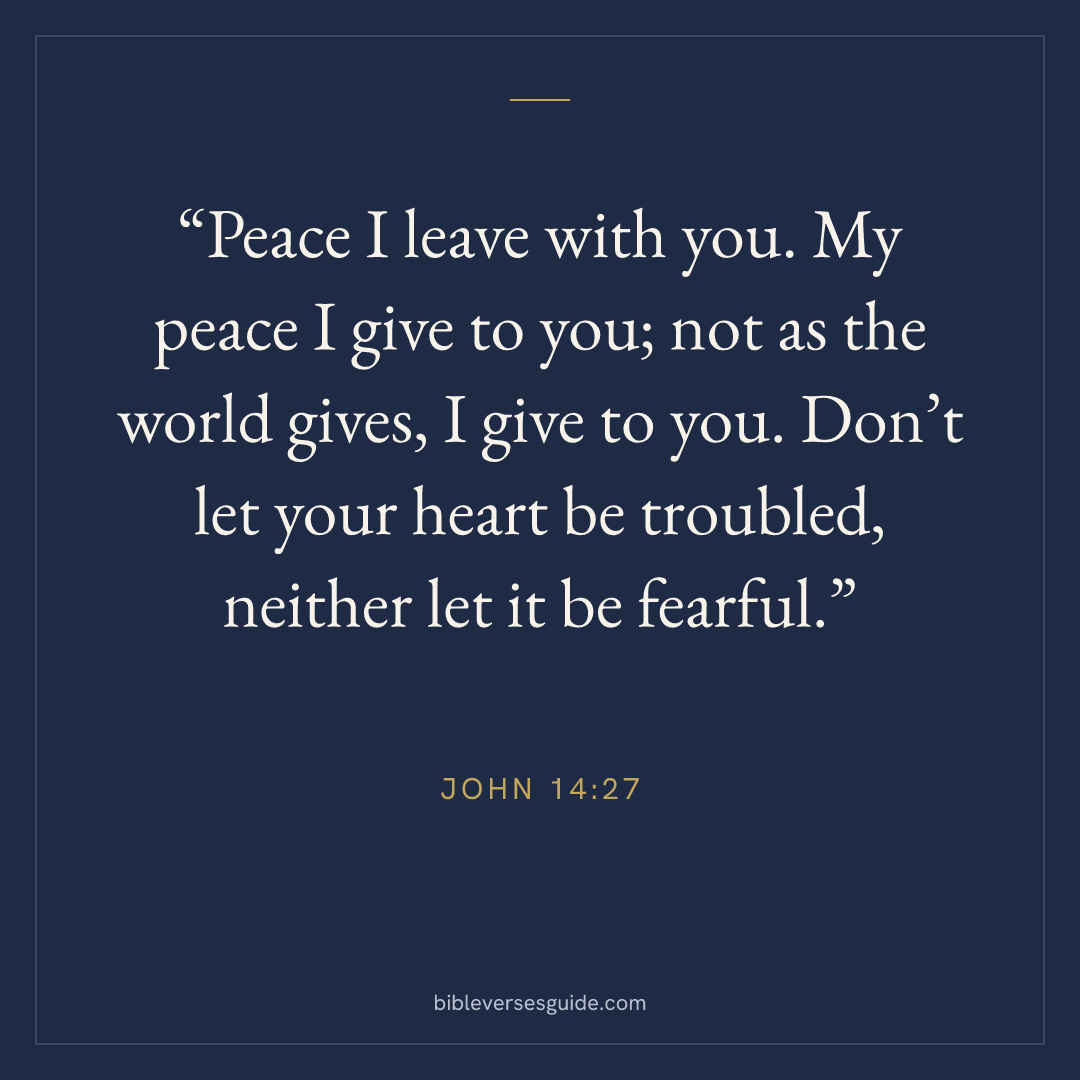
Peace I leave with you. My peace I give to you; not as the world gives, I give to you. Don’t let your heart be troubled, neither let it be fearful.
Pacem relinquo vobis, pacem meam do vobis: non quomodo mundus dat, ego do vobis. Non turbetur cor vestrum, neque formidet.Joannes 14:27 · Clementine Vulgate
Jesus distinguishes His peace from the world’s: it is given, not achieved, and it is meant to steady a troubled heart.
Jesus to His disciples at the Last Supper, the night before His death
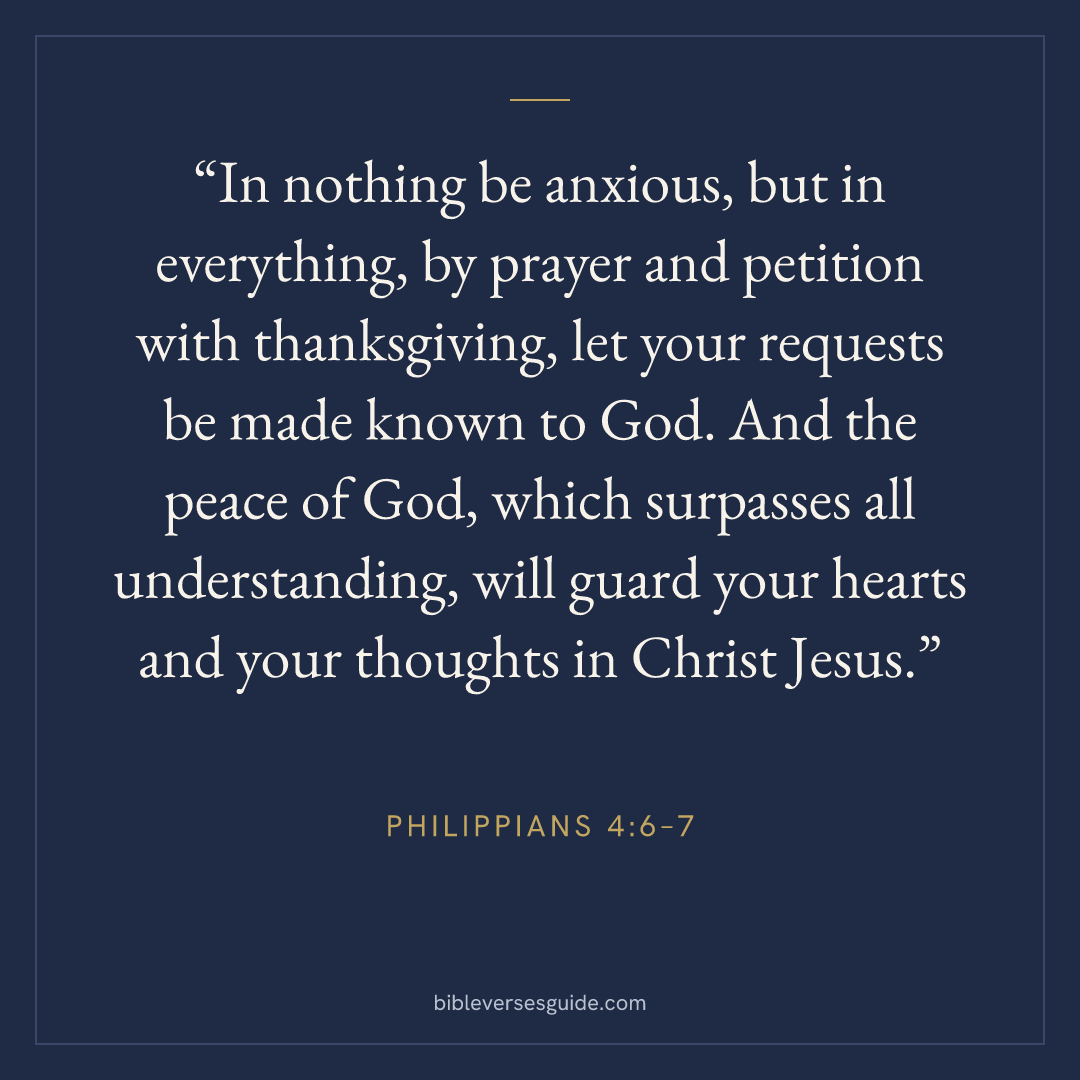
In nothing be anxious, but in everything, by prayer and petition with thanksgiving, let your requests be made known to God. And the peace of God, which surpasses all understanding, will guard your hearts and your thoughts in Christ Jesus.
Nihil solliciti sitis: sed in omni oratione, et obsecratione, cum gratiarum actione petitiones vestræ innotescant apud Deum. Et pax Dei, quæ exuperat omnem sensum, custodiat corda vestra, et intelligentias vestras in Christo Jesu.ad Philippenses 4:6–7 · Clementine Vulgate
Peace here follows prayer with thanksgiving, and it “guards” — Paul uses a military word — rather than explains. It is not promised as understanding but as protection.
Paul, writing while imprisoned, to a community he loved
You will keep whoever’s mind is steadfast in perfect peace,
because he trusts in You.
Vetus error abiit: servabis pacem; pacem, quia in te speravimus.Isaias 26:3 · Clementine Vulgate
A song from Isaiah links peace to a mind that stays fixed on God — trust as the steadying point.
Part of a song of the restored city in Isaiah

Being therefore justified by faith, we have peace with God through our Lord Jesus Christ;
Justificati ergo ex fide, pacem habeamus ad Deum per Dominum nostrum Jesum Christum:ad Romanos 5:1 · Clementine Vulgate
Paul’s foundational sense of peace: not a feeling but a restored relationship with God.
Paul’s letter to the church in Rome
‘The Lord bless you, and keep you.
The Lord make His face to shine on you,
and be gracious to you.
The Lord lift up His face toward you,
and give you peace.’
Benedicat tibi Dominus, et custodiat te. Ostendat Dominus faciem suam tibi, et misereatur tui. Convertat Dominus vultum suum ad te, et det tibi pacem.Numeri 6:24–26 · Clementine Vulgate
The priestly blessing ends with peace — in Hebrew, shalom: wholeness, well-being, nothing missing.
The blessing Aaron and his sons were to speak over Israel
In peace I will both lay myself down and sleep,
for You alone, Lord, make me live in safety.
Latin correspondence unavailable for this passage.
An evening psalm: peace as the ability to lie down and sleep because safety rests with God.
A psalm attributed to David, prayed at night
Blessed are the peacemakers,
for they shall be called children of God.
Beati pacifici: quoniam filii Dei vocabuntur.Matthæus 5:9 · Clementine Vulgate
Peace is also something people make between one another; the Beatitudes call peacemakers children of God.
Jesus in the Sermon on the Mount
And let the peace of God rule in your hearts, to which also you were called in one body, and be thankful.
et pax Christi exsultet in cordibus vestris, in qua et vocati estis in uno corpore: et grati estote.ad Colossenses 3:15 · Clementine Vulgate
Peace is to “rule” in a community’s life together, connected to gratitude.
Paul’s letter to the Colossians, on life in community
I have told you these things, that in Me you may have peace. In the world you have trouble; but cheer up! I have overcome the world.”
Hæc locutus sum vobis, ut in me pacem habeatis. In mundo pressuram habebitis: sed confidite, ego vici mundum.Joannes 16:33 · Clementine Vulgate
Jesus promises peace alongside trouble, not instead of it — an honest promise.
Jesus’ farewell words to the disciples
How this differs from related topics
The Anxiety and worry page starts from the problem — a restless mind — and focuses on passages that speak to it directly. This page starts from the gift: what peace is in the Bible, including the peace between people that the Beatitudes call blessed. Hope looks to the future; peace is about present wholeness.