What this page covers
What does the Bible say to people who are grieving?
Passages for bereavement and loss, including passages commonly read at funerals. General hardship is under Difficult times; the Christian hope of resurrection is introduced here and developed under Hope.
The Bible does not hurry grief. Abraham mourned Sarah; David wept for Absalom; Jesus wept at the tomb of His friend Lazarus (John 11:35) — moments before raising him. If Jesus could grieve while knowing what He was about to do, grief is clearly not a failure of faith.
Comfort for mourners
Jesus calls those who mourn blessed and promises that they will be comforted (Matthew 5:4). The psalms say God is near the brokenhearted (Psalm 34:18) and heals their wounds (Psalm 147:3). These are promises of presence and eventual healing, not instructions to stop feeling.
Grief with hope
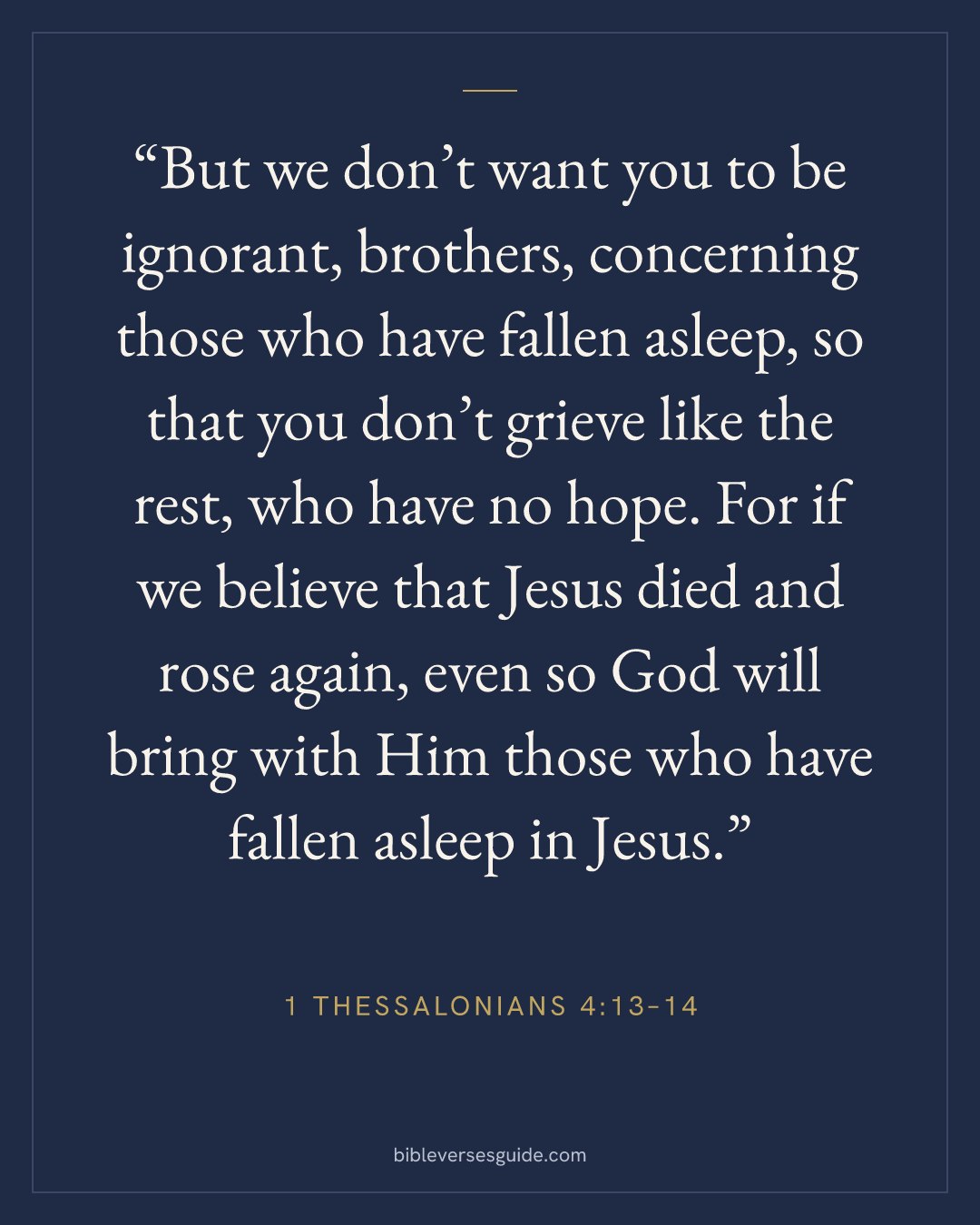
Writing to new Christians troubled by the death of members of their community, Paul did not tell them to stop grieving. He told them not to grieve “like the rest, who have no hope” (1 Thessalonians 4:13–14). Christian hope does not cancel sorrow; it changes its horizon. The vision of Revelation 21:4 — every tear wiped away — describes an end to mourning that has not yet arrived.
At funerals
Christian funerals across traditions often use John 11:25–26, Psalm 23 and Revelation 21. Catholic funeral liturgies also frequently read Wisdom 3:1–3, from a book included in Catholic and Orthodox Bibles. Prayer for the dead is practiced in Catholic and Orthodox traditions and generally not in Protestant ones; if you are choosing readings for a service, the family’s tradition is a good guide.
For friends of the grieving
Romans 12:15 asks simply that we weep with those who weep. Presence often matters more than explanation.
Passages, in context
The Lord is near to those who have a broken heart,
and saves those who have a crushed spirit.
Juxta est Dominus iis qui tribulato sunt corde, et humiles spiritu salvabit.Vulgate Psalm 33:19 · Clementine Vulgate
The LORD is near those with a broken heart.
A psalm of David


Blessed are those who mourn,
for they shall be comforted.
Beati mites: quoniam ipsi possidebunt terram.Matthæus 5:4 · Clementine Vulgate
Jesus calls mourners blessed and promises comfort — mourning is not a lack of faith.
The Beatitudes


Jesus wept.
Latin correspondence unavailable for this passage.
Jesus wept at His friend’s tomb, even knowing what He was about to do. Grief is not rebuked.
At the tomb of Lazarus


He will wipe away every tear from their eyes. Death will be no more; neither will there be mourning, nor crying, nor pain any more. The first things have passed away.”
et absterget Deus omnem lacrimam ab oculis eorum: et mors ultra non erit, neque luctus, neque clamor, neque dolor erit ultra, quia prima abierunt.Apocalypsis 21:4 · Clementine Vulgate
A vision of the end of sorrow: every tear wiped away, death no more.
John’s vision of the new creation


But we don’t want you to be ignorant, brothers, concerning those who have fallen asleep, so that you don’t grieve like the rest, who have no hope. For if we believe that Jesus died and rose again, even so God will bring with Him those who have fallen asleep in Jesus.
Nolumus autem vos ignorare fratres de dormientibus, ut non contristemini sicut et ceteri, qui spem non habent. Si enim credimus quod Jesus mortuus est, et resurrexit: ita et Deus eos qui dormierunt per Jesum, adducet cum eo.1 ad Thessalonicenses 4:13–14 · Clementine Vulgate
Paul does not tell grieving Christians not to grieve, but not to grieve “like the rest, who have no hope.”
Paul answering a community’s questions about those who had died

He heals the broken in heart,
and binds up their wounds.
qui sanat contritos corde, et alligat contritiones eorum;Vulgate Psalm 146:3 · Clementine Vulgate
God heals the brokenhearted and binds up their wounds.
A psalm of praise after the return from exile


But the souls of the righteous are in the hand of God,
and no torment will touch them.
In the eyes of the foolish they seemed to have died.
Their departure was considered a disaster,
and their travel away from us ruin,
but they are in peace.
Justorum autem animæ in manu Dei sunt, et non tangent illos tormentum mortis. Visi sunt oculis insipientium mori, et æstimata est afflictio exitus illorum, et quod a nobis est iter exterminium; illi autem sunt in pace:Sapientia 3:1–3 · Clementine Vulgate
The souls of the righteous are in God’s hand — a passage often read at Catholic funerals.
The Book of Wisdom, a deuterocanonical book


Rejoice with those who rejoice. Weep with those who weep.
Gaudere cum gaudentibus, flere cum flentibus:ad Romanos 12:15 · Clementine Vulgate
Weep with those who weep: what Scripture asks of friends of the grieving.
Paul on life in community


Jesus said to her, “I am the resurrection and the life. He who believes in Me will still live, even if he dies. Whoever lives and believes in Me will never die. Do you believe this?”
Latin correspondence unavailable for this passage.
Jesus’ words to Martha: “I am the resurrection and the life.”
Before raising Lazarus


How this differs from related topics
Grief is a specific kind of hardship: loss. This page avoids passages that rush past sorrow. Difficult times covers hardship broadly; Hope covers the forward-looking promise.